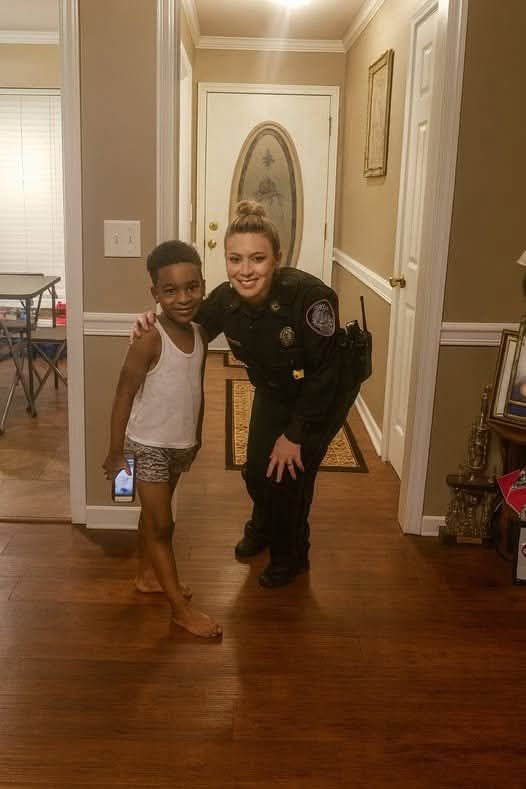
When the call came in, it was marked as “possible child endangerment.”
When officers arrived, there was no danger — only silence.
Inside, they found eight-year-old Mateo and his five-year-old sister, Sophia.
Their mom worked two jobs and hadn’t made it home yet. In the fridge were just a jug of milk and a few ketchup packets.
Officer Rosa kneeled down and asked, “When did you last eat?”
Mateo shrugged. “Yesterday, I think.”
That night, instead of filing a report, Rosa went home, made sandwiches, and came back.
The next night, she brought more — sandwiches, fruit, and juice boxes.
Soon, her partner joined in. Then the paramedics on the same shift.
Before long, it became a quiet Friday night ritual.
They called it Midnight Meals.
A simple project: delivering food, school supplies, and care packages to struggling families every Friday night — no questions asked.
Word spread.
Teachers began donating books.
Grocery stores sent boxes of canned goods.
Teenagers volunteered to pack and deliver food.
Weeks later, when Rosa and her partner returned to Mateo’s home, it looked different.
The once-empty shelves were filled. The air smelled of warmth and color. Mateo ran to hug her, holding a crayon drawing of a police officer and two smiling kids.
At the bottom, he’d written in wobbly letters:
“Thank you for bringing dinner and for seeing us.”
That drawing now hangs in the local police station, framed above the words “Kindness is the first call to answer.”
Sometimes, one phone call doesn’t end a story.
It begins one.